NextDrive
LINE Electricity Housekeeper
Home Energy Management System
Real-Time household electricity reports, bill budget notifications, energy saving missions and more!
Timeline
2021 Sep. ~2022 Aug.
My Role
Product Designer
~6 min read time
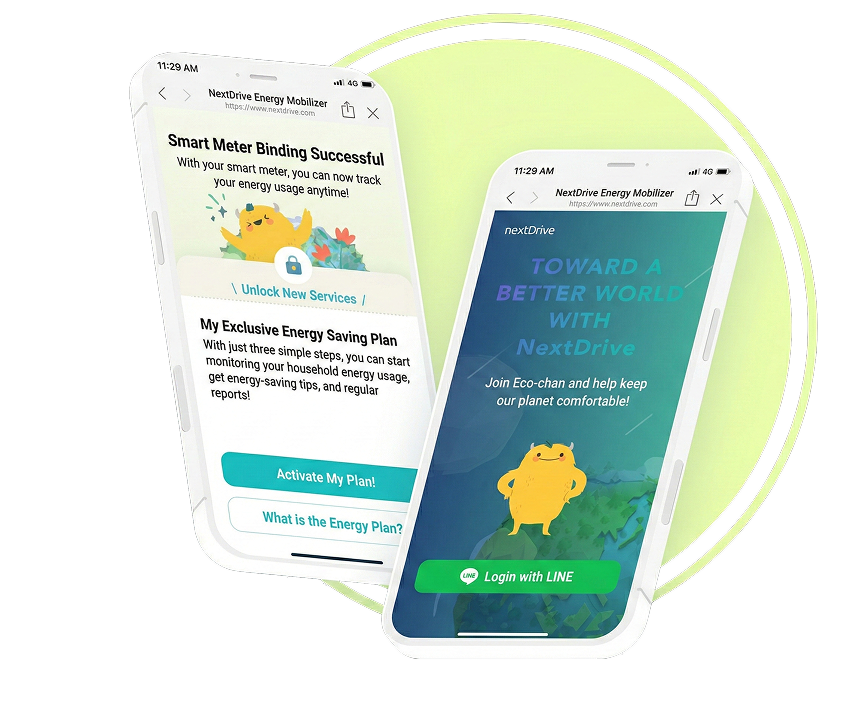
Real-Time household electricity reports, bill budget notifications, energy saving missions and more!
~6 min read time
Team consists of: 1 PM + 2 product designers + 3 developers + 2 QA engineer
In partnership with Taiwan Power Company (Taipower), we launched LINE Electricity Housekeeper — Taiwan’s first digital home energy management service integrated within LINE. For most households in Taiwan, electricity usage was largely invisible. Bills arrived once every other month, long after consumption had already happened. By the time families saw the number, there was nothing left to adjust.
Energy was a fixed outcome, not a controllable behavior. Therefore, this project wasn’t simply about building an app. It was about testing a more fundamental assumption:
"Would families care enough to visualize and engage with their electricity data in the first place?"
To answer that question, we launched the product as a one-year MVP campaign in partnership with Taiwan Power Company. The goal was not scale but a validation. Before committing to long-term infrastructure and system integration, we needed evidence that real-time visibility could shift awareness, habits, and expectations around household energy use.

To explore the preference and ranking of different Taiwan consumer groups in terms of their demand for electricity data and their envisioned applications, given the low electricity cost and state-owned power grid in Taiwan's market.
To get more information about this market and define our potential users, we decided to outsource a survey company to help us reach out more suitable subjects in the most efficient way and make our research more reliable. From the result of the survey (effective sample size: 1000 people), we analyzed users’ background, needs, pains and brainstorm several possible features as followed:
From the research results, we had few hypothesis:
✦ There are significant differences in the demand preferences of different consumer groups
✦ The three user groups, ranked by their preference for current product features, are shown above
✦ Providing detailed analysis or records of electricity usage can help generate energy-saving strategies
✦ Understanding the electricity usage patterns of others or participating in community competitions can motivate individuals to improve their own electricity usage behavior
Besides survey for users, we also conducted a stakeholder interview to seek a sweet spot between users’ pain and business goal for this product. From the interview, we found out that the stakeholders care a lot about the number of active users to participate in demand response, which requires a huge user base. The other business viewpoints and the accordingly design goals are as followed:
✦ Become the leading role in the field of home energy management by providing useful and desirable services to the right customers
✦ Get access to users’ electricity data from Taipower and eventually become a resource aggregator to solve demand response problem by dispatching home energy to where it’s needed
✦ Since this is an MVP for the global version app, lower any design and development cost if possible
✦ Having 100+ active users (1000+base) in 3 months
✦ Decreasing behavioral errors/confusion and customers support costs
✦ Receiving users’ positive feedback (through survey from in-app service at the lowest cost)
I studied a few electricity related services to identify patterns and catalog their offerings to users.
On the other hand, I compared an app based in Japan, "Power Saving Challenge by Tohoku Electric Power App" (with 50K+ users), which encourages users to reduce their consumption at a certain time of a day to balance the electricity grid at a national level.
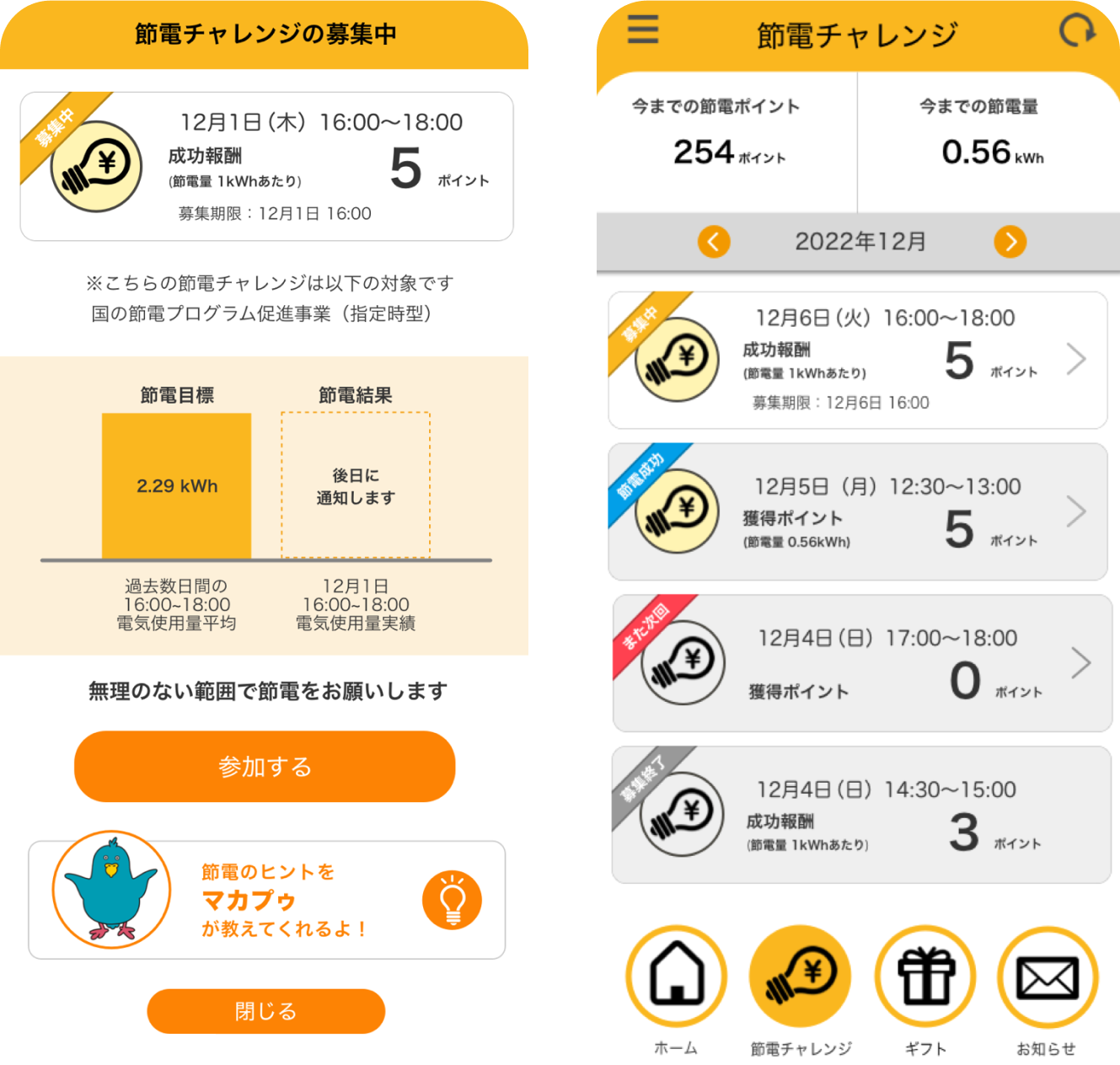
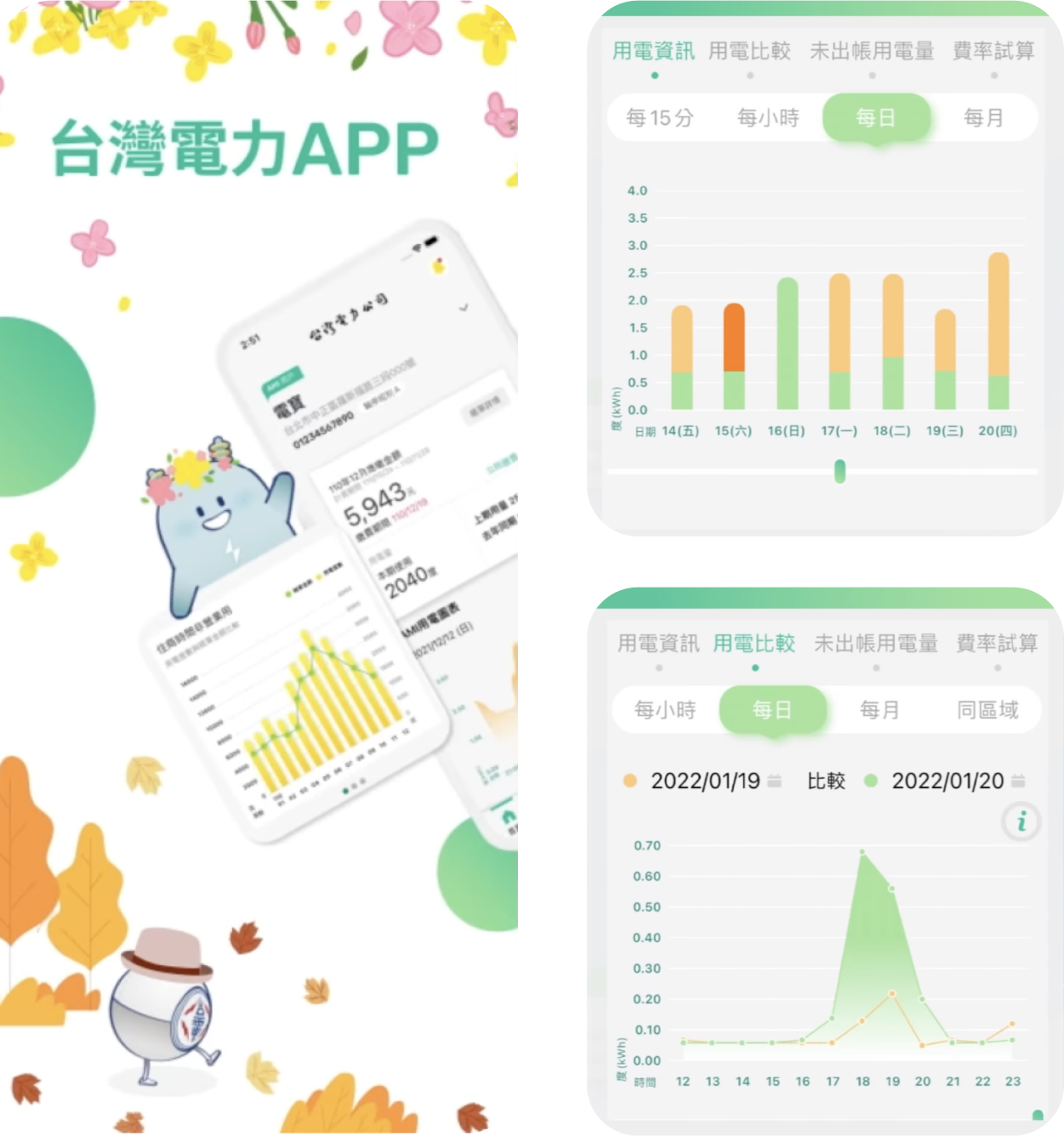
To begin with, Taiwan’s biggest and only power company’s app has a very similar position with our solution, with electricity visualization and more useful functions, such as paying bills or payment record. However, most users complained that the complex functions make it harder to use and lead to frequent errors. I also conducted interviews in person with 5 other users and received the similar feedbacks.
Therefore, we aim to absorb the pros and avoid the cons of the Taipower APP by adding only essential functions (e.g. electricity & bill visualization) and combine the power saving challenge with on the Japanese app in our service, so that there won’t be too many complicated features that make the product scale too huge to be controlled.
To help us better align our user’s tasks and goals, we created a list of ‘How Might We…’
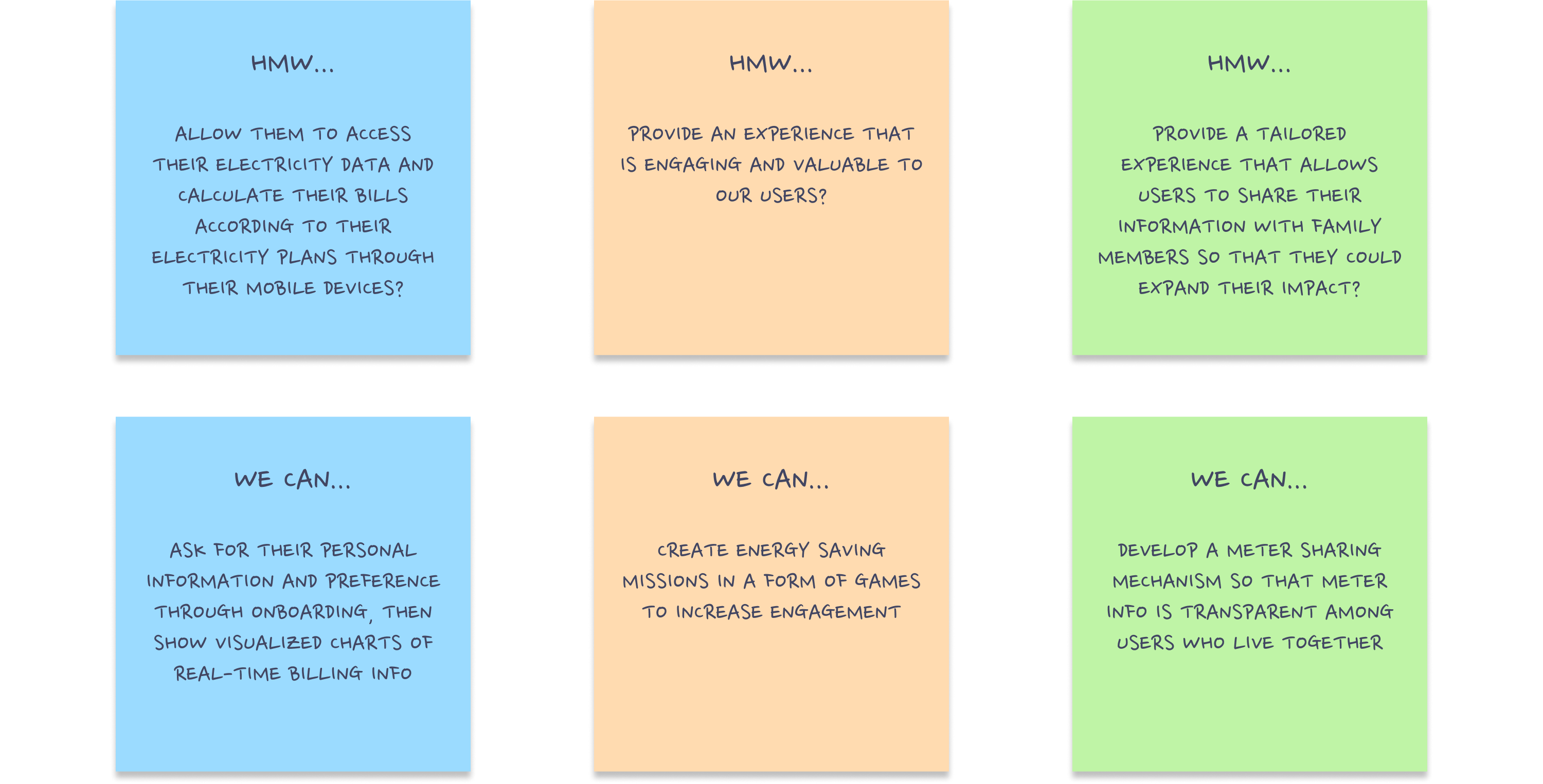
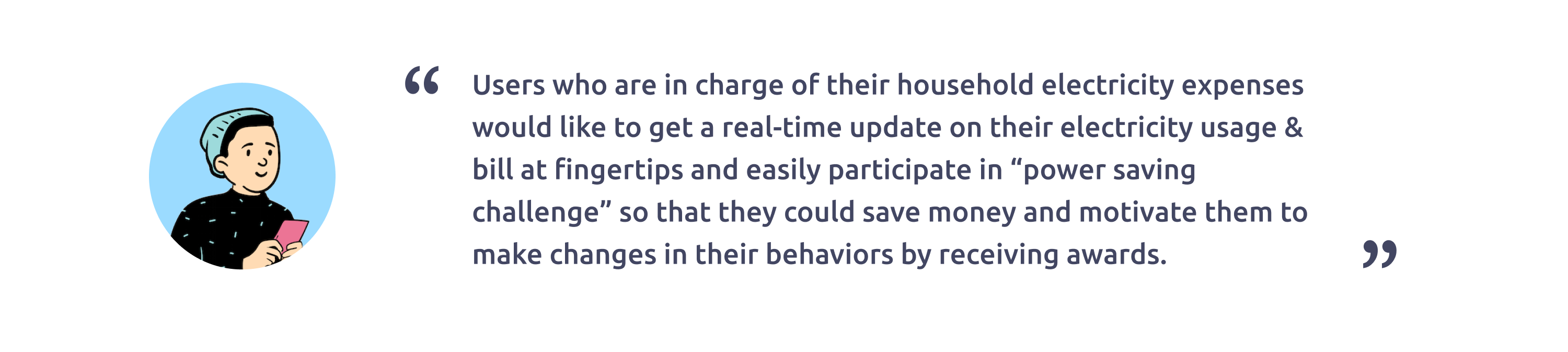
Different from other services, we hope our users check the real-time status of their electricity use and bill at their fingertips. Therefore, we chose “LINE” as our service platform, which has 21 million LINE users in Taiwan (that’s over 90% of the whole population), with a weekly usage rate of 93%. This also significantly lowers the development cost compared to an app.Moreover, we want users to be able to set their own budgets while receiving real-time notifications in the chatroom when an exceeded amount is detected. Once they notice the high demand of the electricity, they will be able to visualize the data with clear charts, which help them make better decisions in electricity-consuming behaviors.In addition to notifications, users can play games and earn points when they complete the game so that they find it interesting to save energy and become more willing to do so.
After we locked down the functions, I started sketching wireframes and turned into a prototype for further validating and testing. Below are some of the high fidelity prototypes I made after 4 weeks of researching and defining problems.
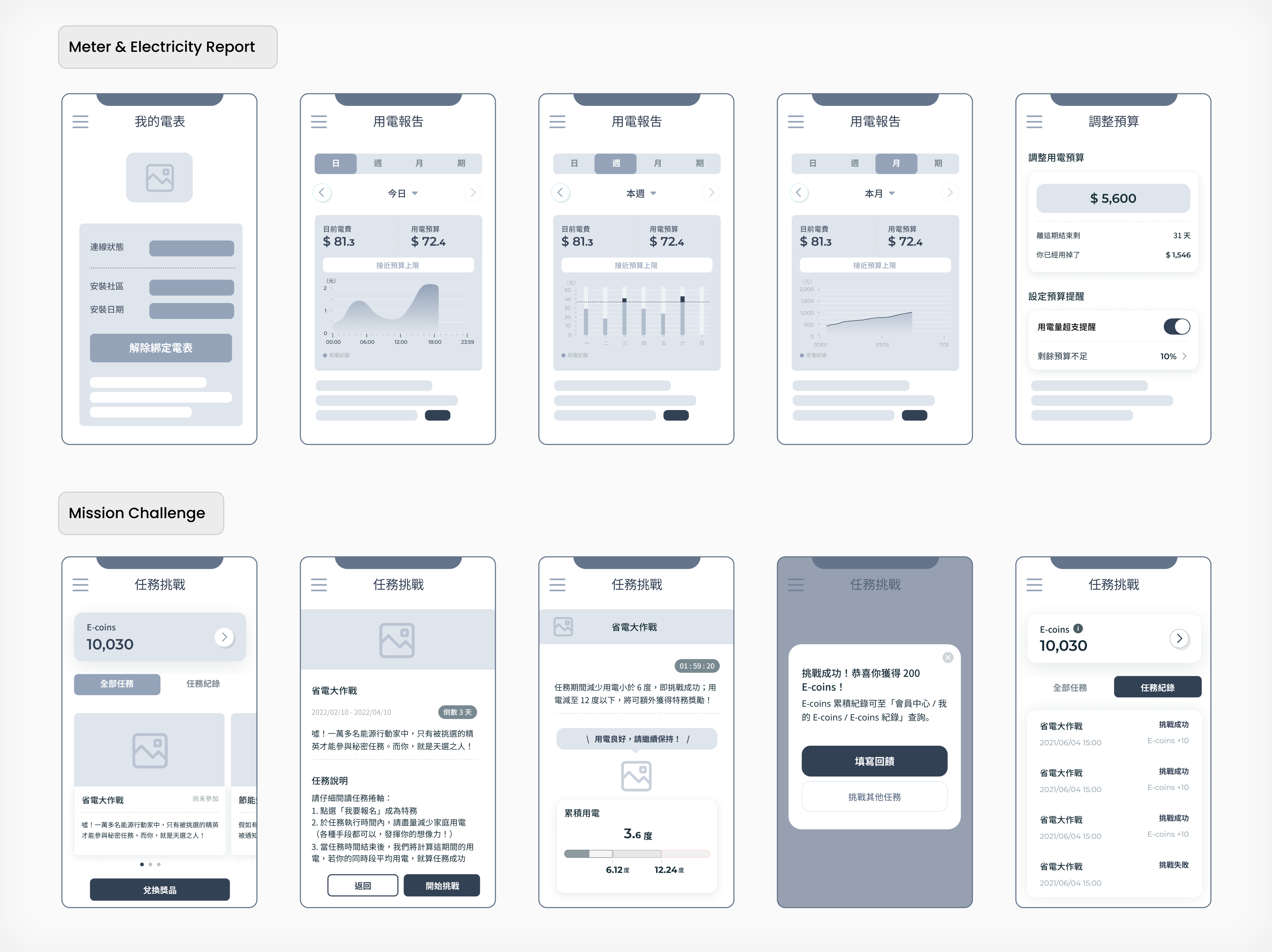
Before moving into development, I conducted 5 unmonitored usability testings based on the above prototypes to tweak and refine the design. The key findings and the adjusted designs are shown below:
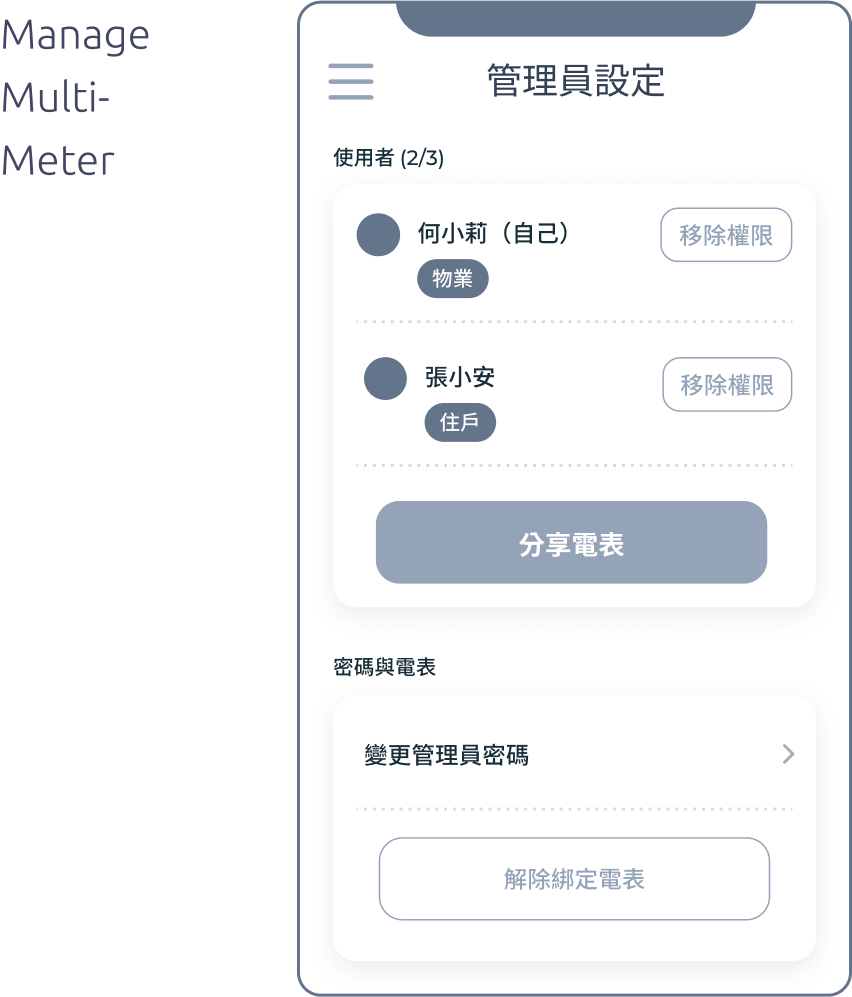
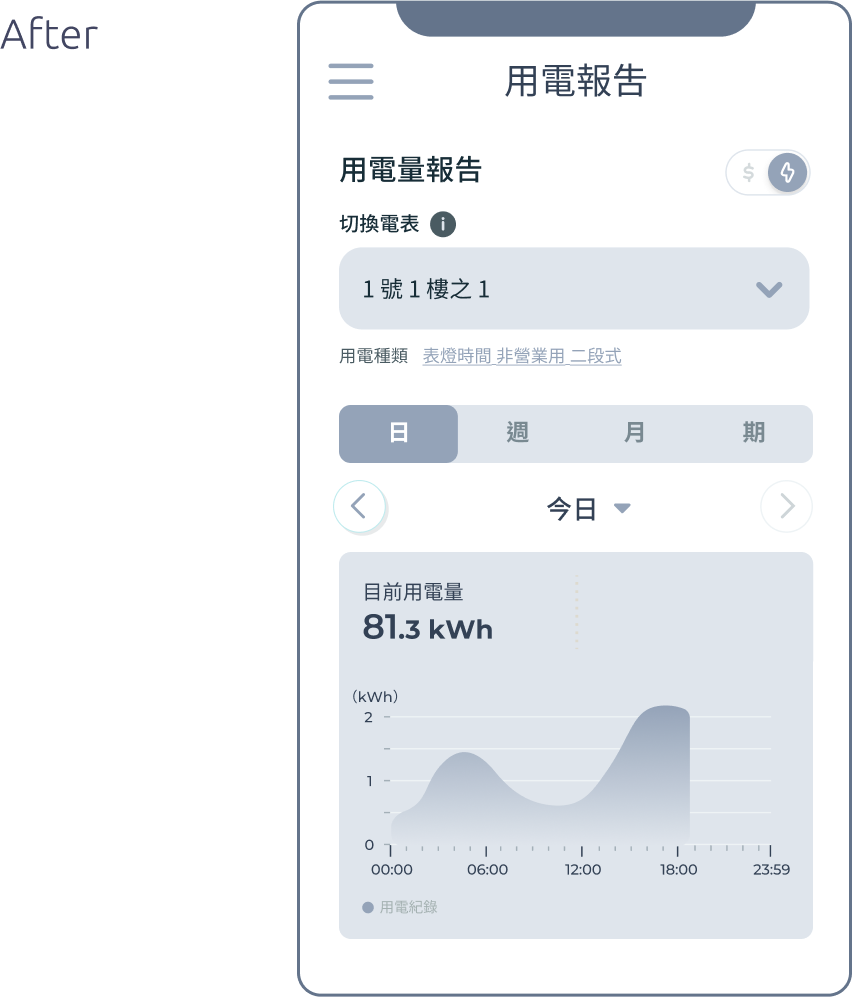
✦ Users who have 2 or more meters needed to sign up with different LINE account as one meter can only be bound to one account. Therefore, multi-meter management is needed.
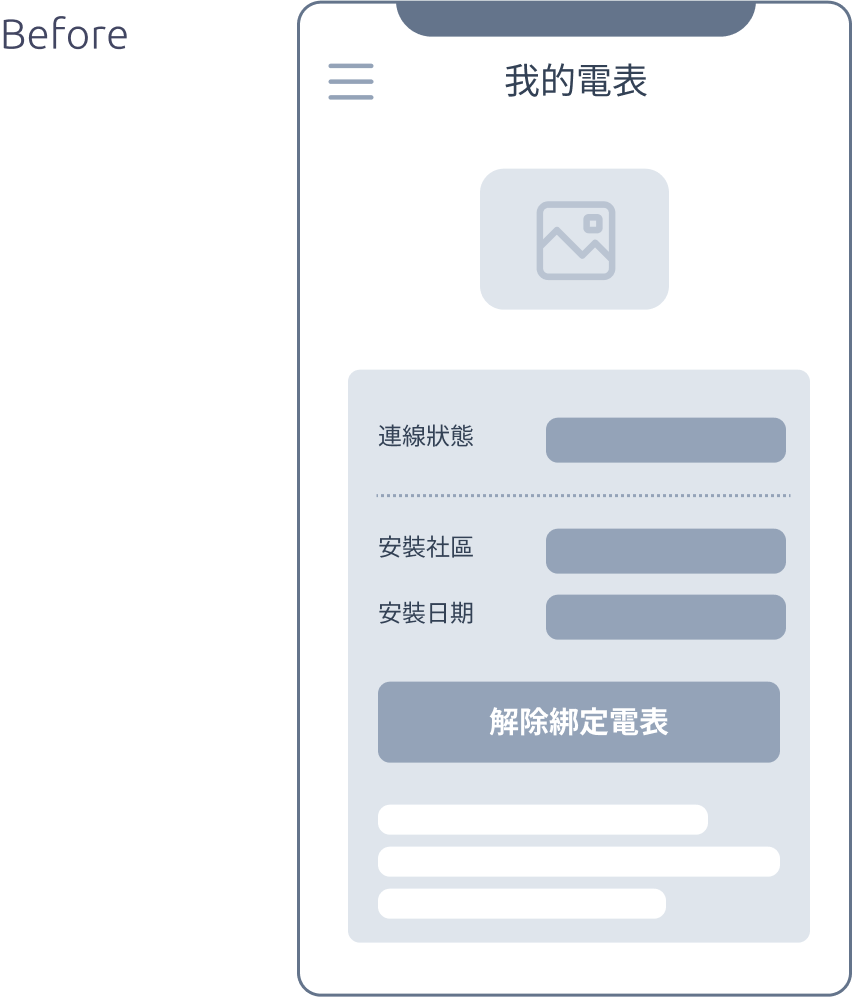
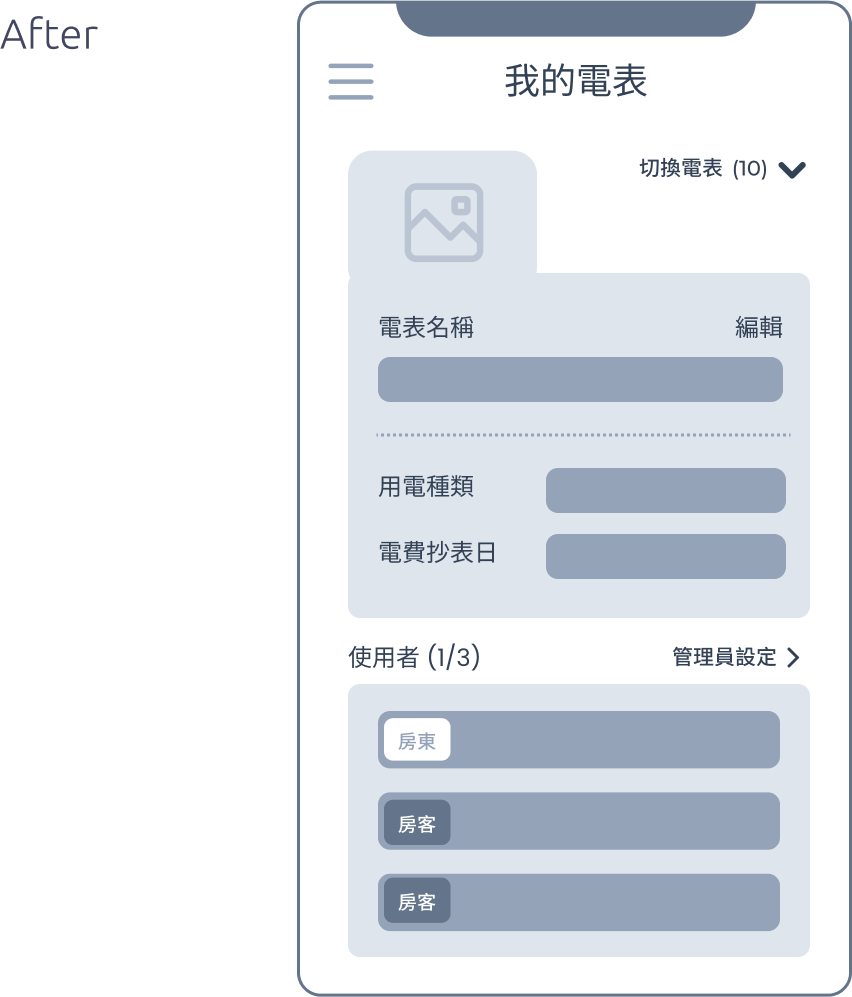
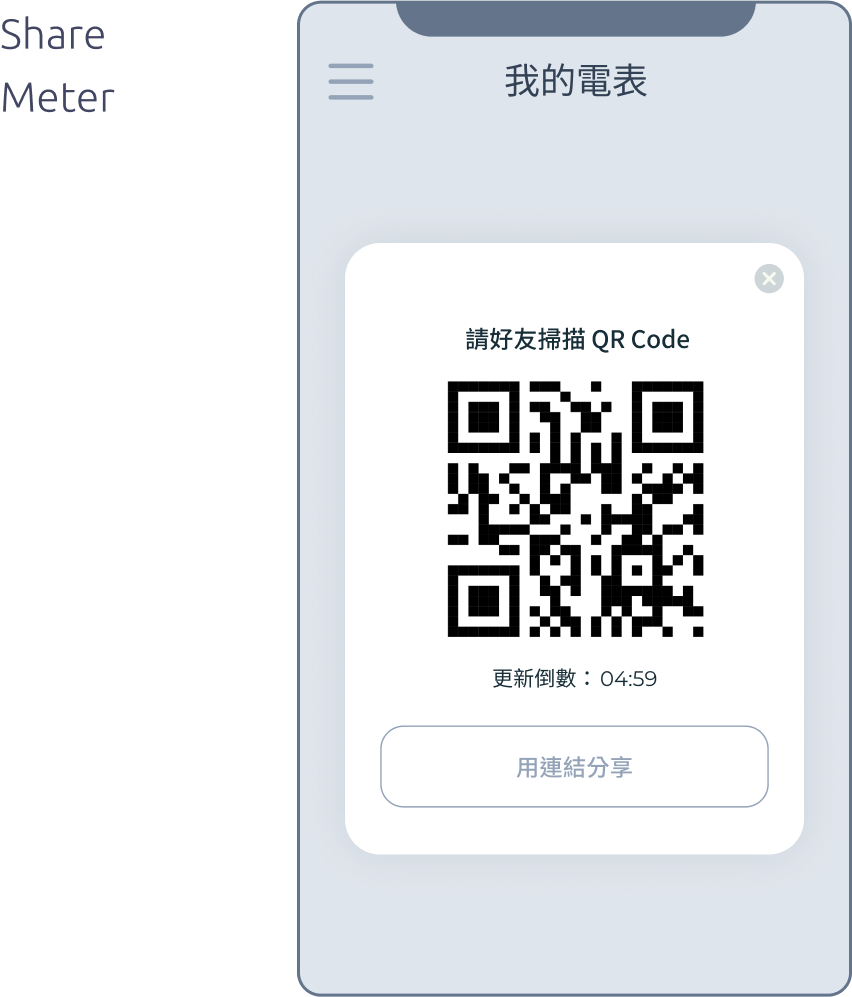
✦ Users would like to share information about their meters with family members or roommates while receiving electricity alerts.
✦ This way, we transform them from passive recipients into energy activists, who not only take control of their energy lives but also positively affect other family members as a whole.
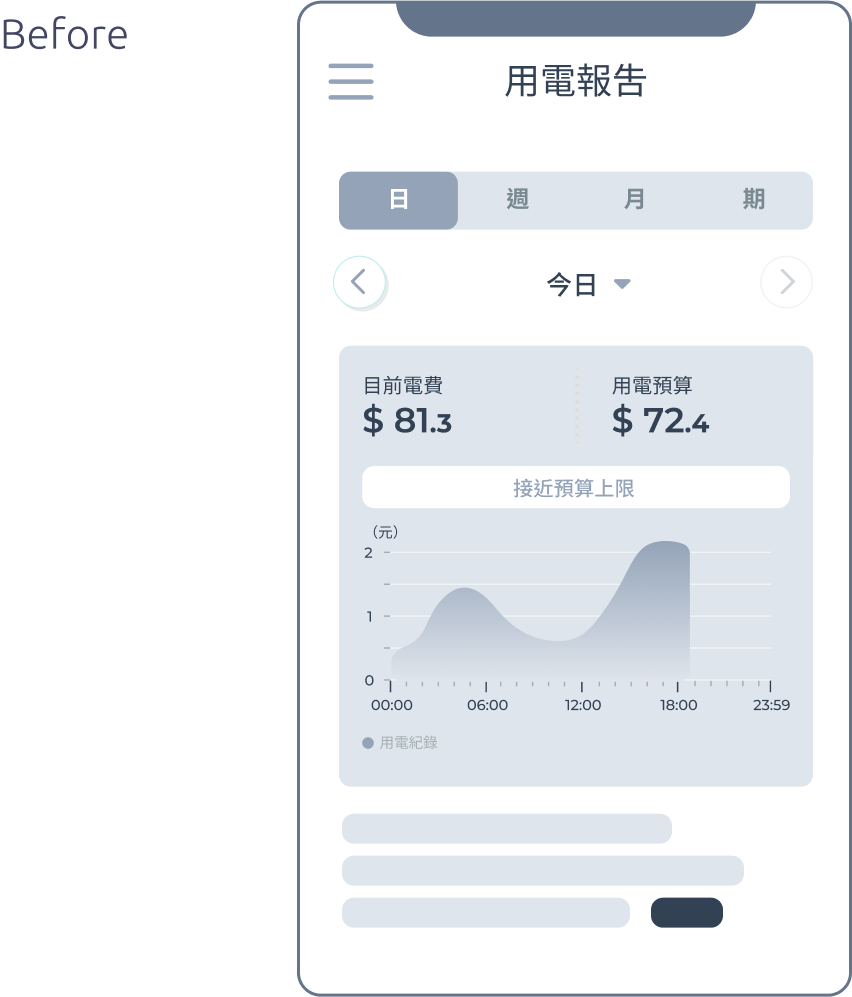
✦ When users have multiple meters, it’s hard to tell which meter they’re looking at and which electricity plan is applied for the calculation of the bill, thus being able to switch meters and showing the details would be more helpful.
✦ Besides billing info, users would also like to check their consumption calculated in kWh to check their real amount of usage since the price differs by the time of the day.
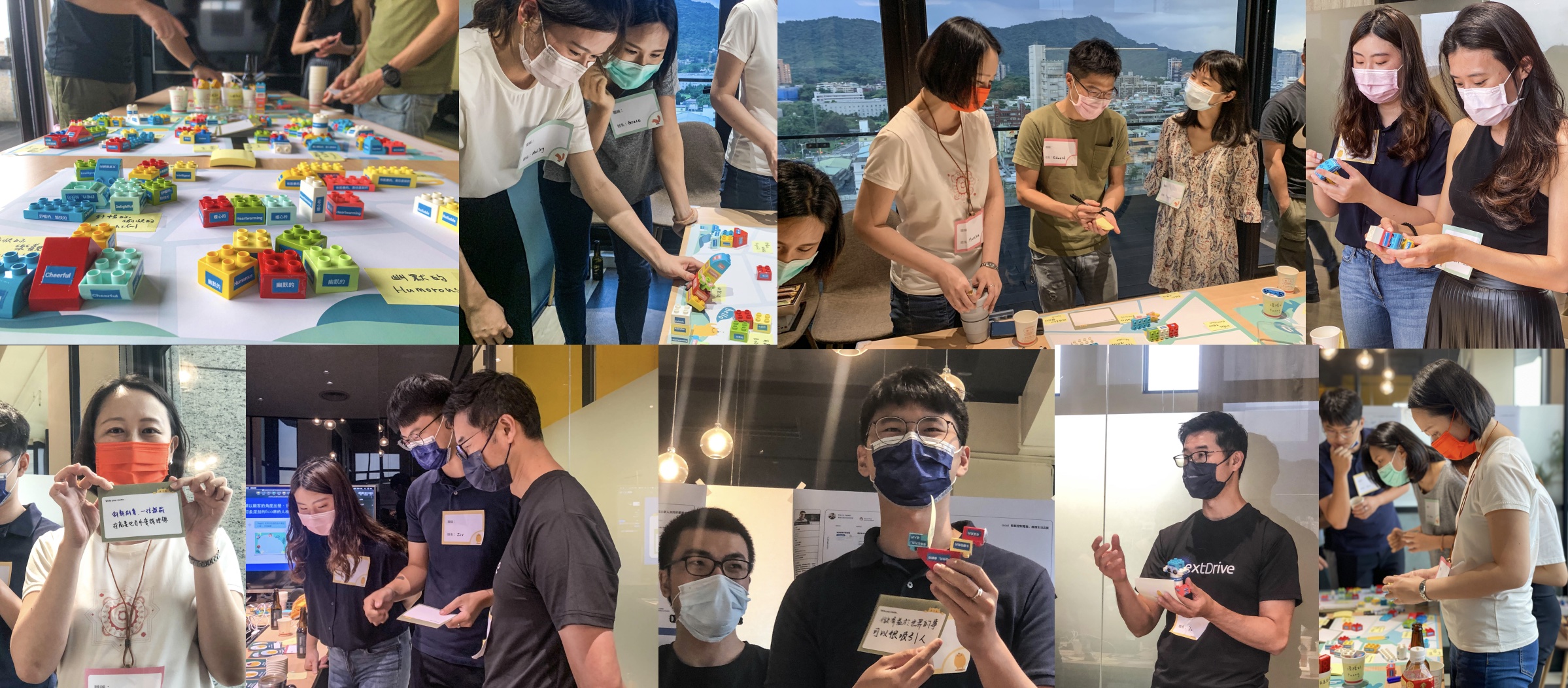
Right after the project kickoff, we organized a discovery and empathy workshop to understand how we could create a memorable impression for our product. We invited not only designers but also stakeholders, Marketing and Product Team to brainstorm user scenarios from a broader point of views.
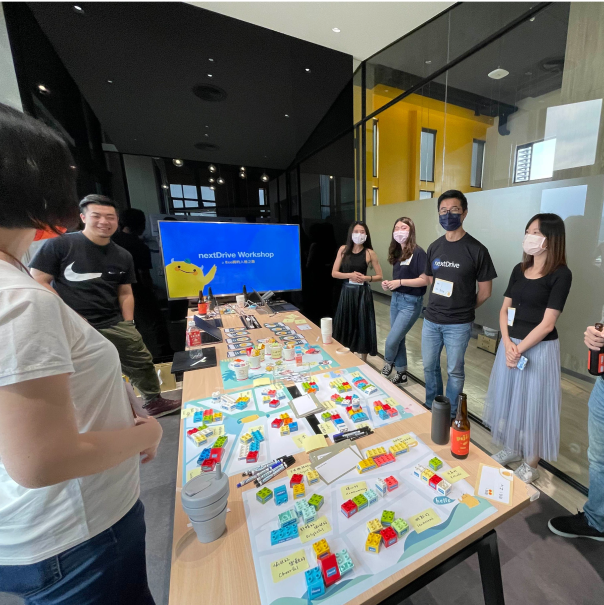
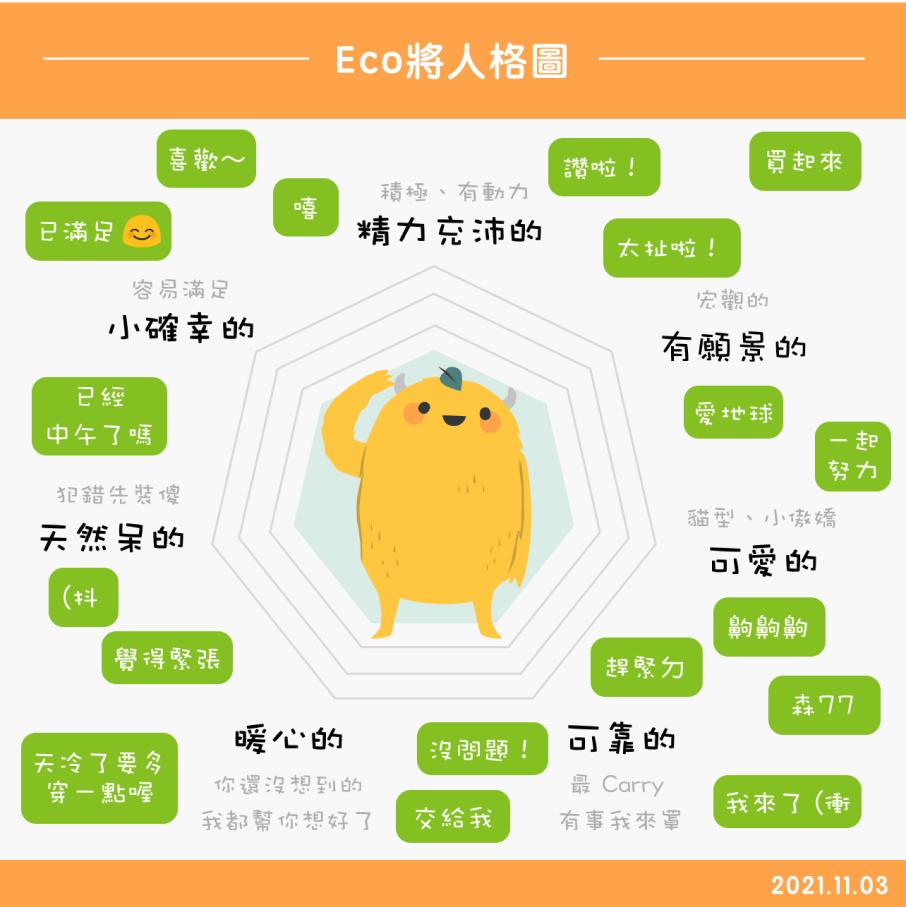
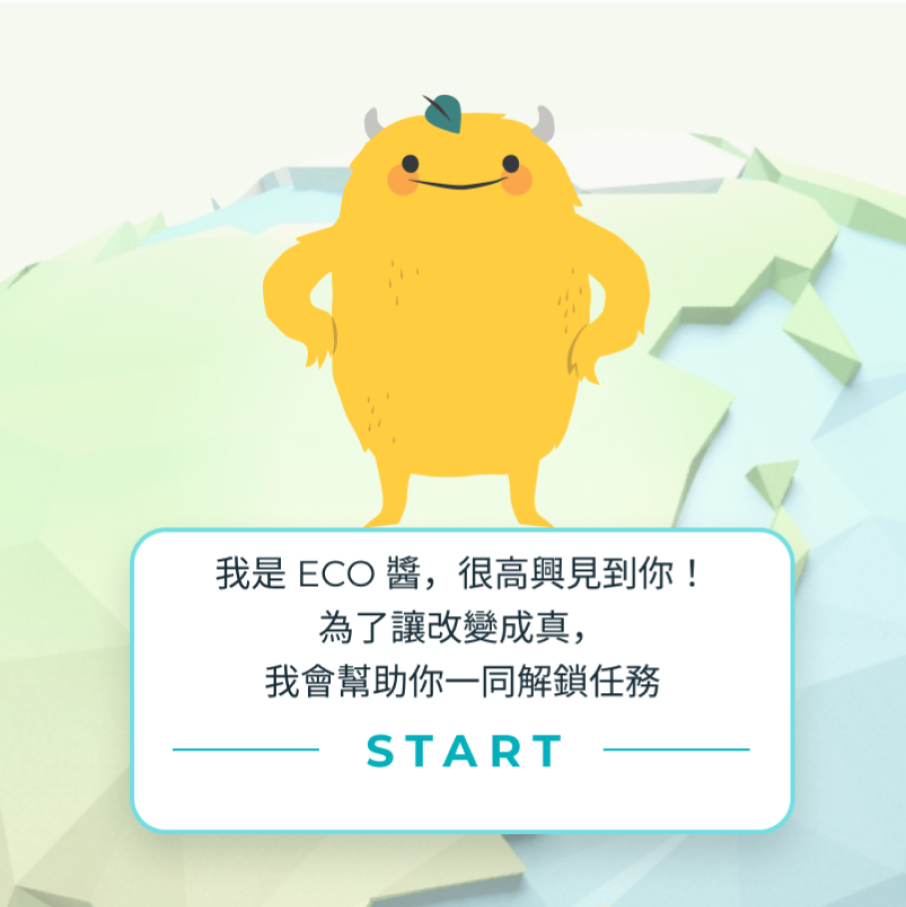
Throughout the process, we came to a consensus to focus on redefining our corporate mascot – ECO-chan (the yellow fluffy elf).
We defined ECO-chan’s characteristics as energetic, adorable, ditzy, reliable, satisfied, heartwarming and visionary.
We invited ECO-chan to our product as a bridge between business and users. He is also an ambassador that guides users through the journey and convey our ideas.
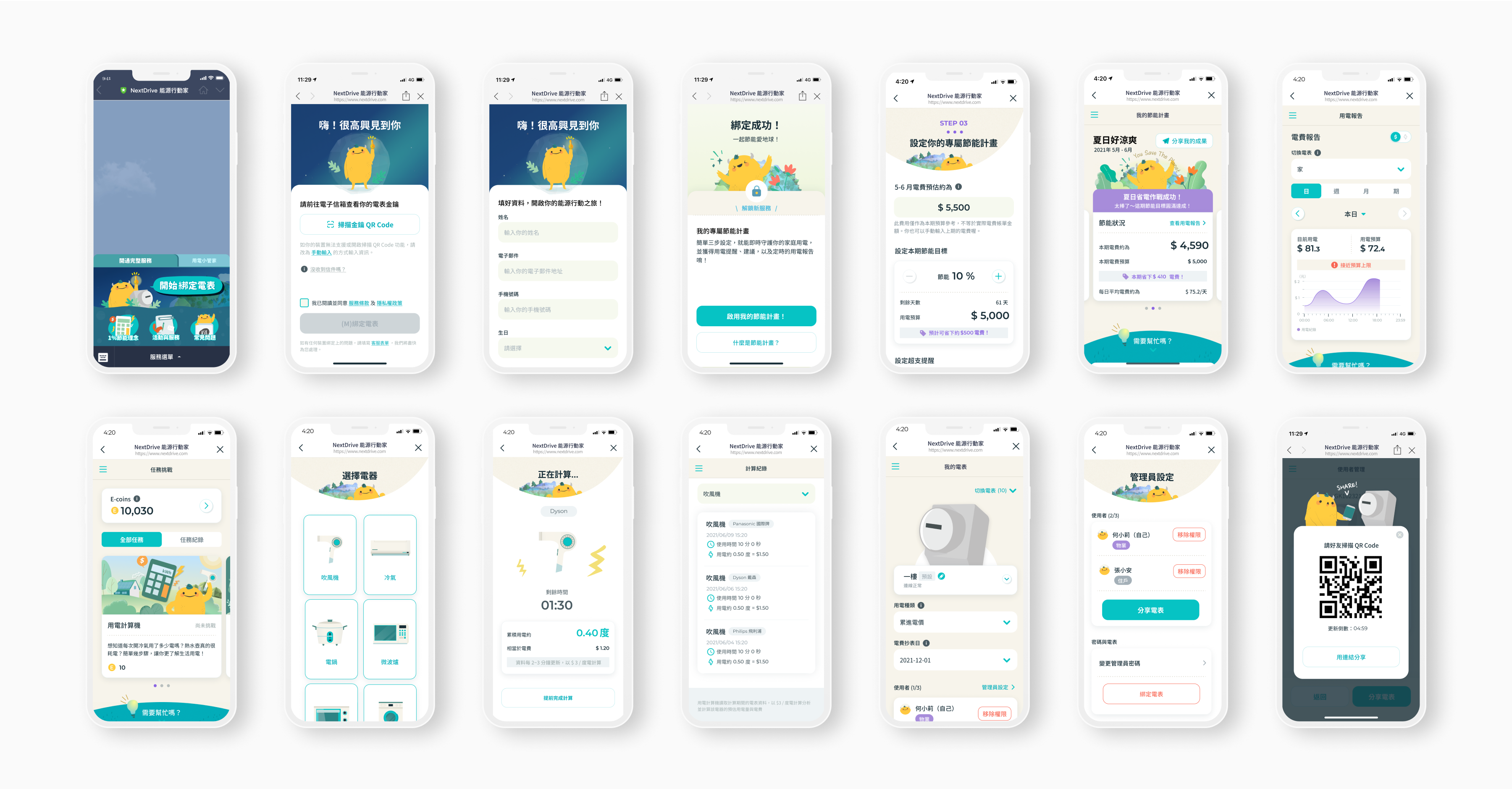
Once the usability issues were resolved, we moved on to design the final screens. Our goal was to create a visual identity that’s aligned with the brand’s values and message – “making energy count”.
1.https://agirls.aotter.net/post/60361
2.https://today.line.me/tw/v2/article/JPJrDrq
3.https://www.sogi.com.tw/articles/nextdrive/6257491
All and all, by visualizing household electricity use, we successfully reached 100+ active users (1000+base) in 3 months. Furthermore, we conducted a survey 2 months after the service is launched. Nearly 70% of our active users claimed that electricity visualization and the idea of making energy count eventually result in action and behavioral changes in real life!
However, due to Taipower's policy and the project's schedule, we haven't got a chance to really host a "Power Saving Challenge" yet. If we reached an adequate user base and thus are able to host a power saving challenge, I would love to see how users react to it and how it impact the environment and society as a whole.
It was definitely a huge challenge for me to study related electricity regulations, understand all the hardware (meter, gateways) limits, and help our users reach their saving goals while assisting businesses to collect users' electricity resources. Though we struggled to complete the project within 1 year, thanks to all members in HEMS team, we eventually made it! I had such a great luck to work with them.
In order to meet the time of our product launch, we adopted agile development and run sprints for this project. This was actually my first time running in a scrum team. I've learned how to collaborate efficiently with other designers, product owners/managers, and developers, quality assurance engineers as well as communicate with the stakeholders. The best things I love are sharing new insights and working out problems with the team in our daily and retro meetings. This not only helped ensure that everyone is on the same page and working towards the same goals but also enhanced our team relationships.
Besides, I've learned iteration and testing is essential and indispensable. Based on feedback from users and stakeholders, we had continually and frequently tested, refined our solutions, which helped us identify issues earlier and make improvements to the design before moving into development or service launch.
